Across the world, communities often imagine support as a one-way exchange: those with resources give to those with less. Yet some of the most meaningful partnerships are built not simply on giving, but on learning.
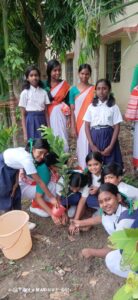
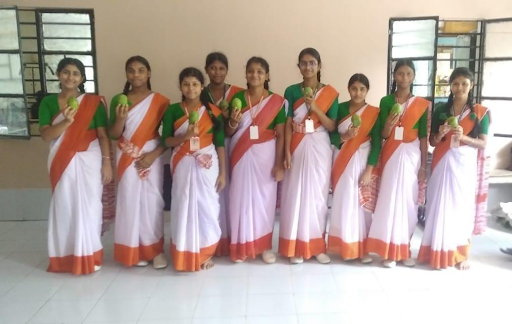
In the remote village of Keoratala in India stands Keoratala Basanabala Girls’ High School, a school born from a quiet act of generosity. Decades ago, a local resident—not a person of wealth or political influence, but someone with an unwavering belief in the transformative power of girls’ education—donated land so that local children could have access to schooling.
More than thirty years later, that vision has flourished into an all-girls residential school offering a thorough educational experience which includes the arts, sciences, digital technology, and preparation for India’s National Year 10 examinations.
For many students, however, the school represents far more than education.
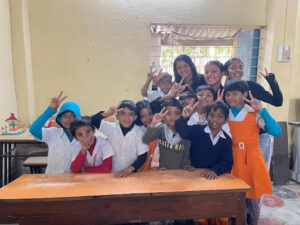
Many of the girls come from remote tribal communities where access to schooling, healthcare and even basic necessities cannot be taken for granted. The school’s dormitory provides not only accommodation, but also nutritious meals, healthcare, safety and a sense of belonging. It is, in every sense, a home.
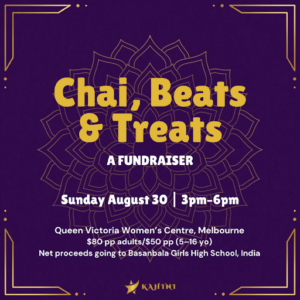
Although supported by a small number of committed donors, the school continues to rely on community generosity to sustain this work. It is for this reason that the proceeds from the upcoming Chai, Beats and Treats event will contribute towards supporting the school and its students.
Having noted this, to describe this relationship simply as financial assistance, would overlook its greatest value.
Learning Across Continents
During a recent visit, conversations with the school’s educators revealed something that was both unexpected and deeply thought-provoking.
When asked how teachers managed conflict among students, the question was met with puzzled expressions. Clarification was sought—not because conflict resolution strategies were confidential, but because the educators struggled to understand the premise of the question.
Coming from an Australian educational context, where discussions around anti-bullying programs, restorative practices and conflict resolution are commonplace, it seemed almost inconceivable that conflict would not be a regular concern within the school and residential boarding environment.
The educators’ explanation was remarkably simple.
The girls, they said, live with a deep sense of gratitude. There is no conflict.
Many have grown up in circumstances where food, shelter, clothing and education were uncertain. The opportunity to attend school is not viewed as an entitlement but as a privilege. This shared gratitude shapes relationships in ways that leave little room for jealousy, resentment or competition.
Their response was not presented as a formal educational philosophy or behavioural framework. It emerged naturally from the realities of the students’ lives and from the culture that has developed within the school community.
Rethinking Gratitude
This experience raises questions that extend far beyond one school in rural India.
Is profound gratitude something that only emerges through hardship? Or have more affluent societies simply lost opportunities to cultivate it? Is it possible to shift from a mindset of entitlement to that of privilege?
Australian schools increasingly invest in wellbeing initiatives that encourage practices such as gratitude journals, gratitude walls and reflective exercises. While valuable, these activities often sit alongside increasingly complex approaches to managing conflict, anxiety and social disconnection.
Perhaps the more important question is not how we teach gratitude as an activity, but how we nurture it as a way of being.
What beliefs, relationships and daily practices allow gratitude to become woven into the fabric of a community rather than remaining an occasional classroom exercise?
These are questions that communities everywhere continue to explore.
A Circle of Exchange
Supporting Keoratala Basanabala Girls’ High School is therefore about more than helping to provide educational opportunities.
It is an invitation to build a relationship founded on mutual respect and shared learning.
Our communities here in Australia may be able to contribute financial resources that help sustain the school’s remarkable work. In return, this small school in rural India offers something equally valuable: an opportunity to reflect on alternative ways of nurturing community, belonging and gratitude within education.
Too often, stories of international partnerships are framed around what one community lacks. Perhaps a more meaningful narrative asks what each community has to offer the other. It is hoped that the event Chai, Beats and Treats creates an opportunity to cultivate an enduring exchange – one that is not measured by money alone. Perhaps this can blossom into an exchange of ideas, perspectives and human connections that travel in both directions.
Kahini is proud to present Chai, Beats and Treats: a fundraiser on 30th August 2026 bringing together our local community in Melbourne to raise awareness and funds for Keoratala Basanabala Girls High School. It’s an afternoon of community engagement, delicious high tea, chai, art, inspiration and connections. Through all our events, Kahini supports local artists and this event is delighted to bring together creatives spanning from visual arts, dance, DJ, music and drums as well as local women-led businesses in food and chai. Follow Kahini on socials to keep updated about our ongoing work with the school and future projects. Thank you Pooja for this amazing write up and your support!
About the Author:
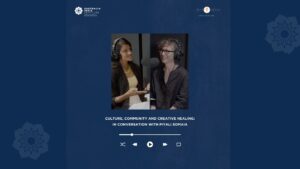
Pooja Ganglani is an entrepreneur, educator and researcher passionate about the transformative power of education and the insights that emerge through cross-cultural exchange. Holding a PhD in Education from Flinders University, Australia, she continues to explore holistic approaches to learning, the evolving purpose of education in an age of artificial intelligence, and how education can nurture more compassionate, connected and conscious communities.