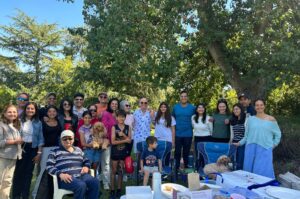
It had already been an exciting whirlwind trip to India for our family over the past 12 days, with special family time, a tour of the Golden Triangle where we were tantalised by the stories and architecture of majestic India and catching up with friends and family over the most incredible food, music and laughter. But this cold January Monday morning in Kolkata felt a bit different. We woke up early in anticipation of a visit to rural West Bengal – to meet the staff and students at Basan Bala School (Primary and Secondary) – a school founded by colleagues of my dad and supported by a few dedicated sponsors from around the world. But that doesn’t quite capture the essence of what the school is about – I hope by penning down some of our experiences that day helps to capture a bit of the magic that has been created from just an idea and a few brave people who took the steps to make it happen.
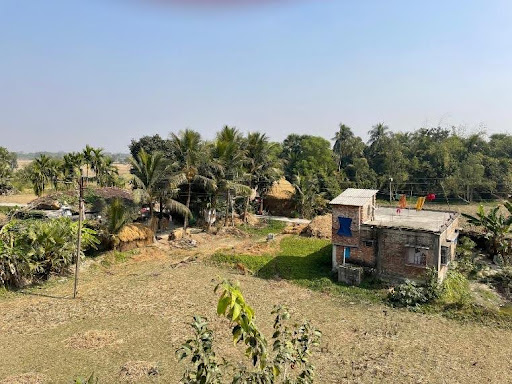
We had a four-hour journey from Kolkata to Sundarban – the van traversing through the bustling city to the outskirts full of small crowded roadside stores and houses, to farmland and greenery of the countryside. When we were closer to the school, the road became a small narrow elevated path – only suitable for bikes and walking. Either side had swamps, lakes, ponds or grass with grazing goats and cows. But in true Indian style, our van continued, sometimes we felt as though the people passing by on their bikes, autorickshaws or by foot would be bowled over by our oversized vehicle – but our driver and the pedestrians expertly manoeuvred each other without any casualties (although we felt a bit guilty and there were a few verbal arguments!).
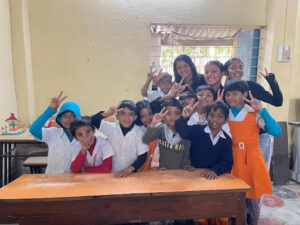
Reaching the school, we were warmly welcomed by a swarm of gorgeous girls (students) waiting for us at the gate – throwing flowers on us and saying, “Welcome Ma’am, Welcome Sir” and their smiles and genuine joy was contagious. We met the owner of the school and his son, his staff and teachers – all who received us with open arms, and we instantly felt at home. We started with a tour of the newly renovated high school – which caters to 142 girls in the rural areas who otherwise would not have the opportunity to attend a school at all – free of charge. The school also provides free dormitory accommodation for 60 girls who live too far away to commute.
What makes the school special is that it provides access to education for girls from marginalised communities, removes the financial barriers and simultaneously challenges social norms for school attendance (the first girl in their family to go to school).
It goes without saying that the trajectory for these girls and their families is infinitely improved with access to higher education and the resulting possibilities.
Walking around the classrooms – it was impressive to see zoom facilities in the computer room, where they can dial in teachers from the big cities for some specialised subjects. There was a well-equipped sewing room, where the girls learn embroidery, stitching and mending. The bathrooms and showers were clean, had access to menstrual hygiene products and reliable hot water for the times that the girls had their showers (the dormitory girls). Upstairs we were instantly captured by the light-filled, clean and tidy dormitories, with coloured bunk beds and a small desk next to the bed for their belongings. On the third floor was an open rooftop with potted plants grown by the students, and an area to clean and dry clothes and crockery. All areas were so clean and with the glowing sun on the rooftop and sweeping views of the farms; we were happy to hear that the space was also sometimes used for celebrations and festivals.
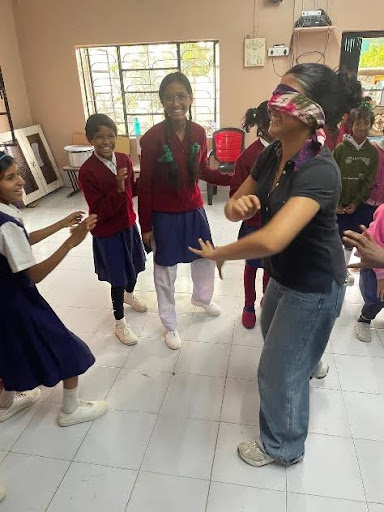
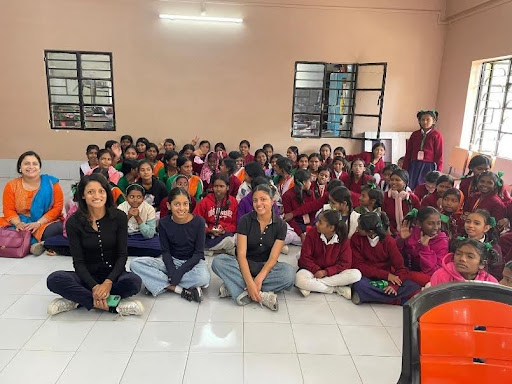
The best bit though was what happened next. We went down to join all the staff and students for a cultural show and general mingling session. The girls showcased dancing, singing, yoga and poetry – all so enthusiastically and had so much talent and humility. Tiya and Kiera joined the students in games like blindfold tag and musical statues. They also learned some Indian and Bollywood dance moves and sang along to songs played from YouTube. There was this instant connection – and although sometimes needed a bit of translating – generally everyone had this ability to work out what the game was and just go with it. The phrase I most had to translate was – “Can you please tell our Didis (older sisters – Tiya and Kiera) to come back again soon and play with us again”. Tiya and Kiera also taught the group What’s the time Mister Wolf and judged a dance competition for them. Leaving them was the hardest part as it just did not feel like enough time.
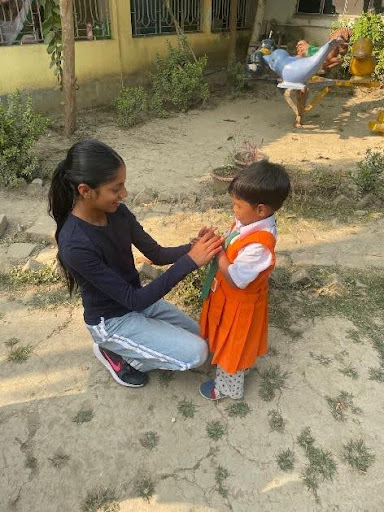
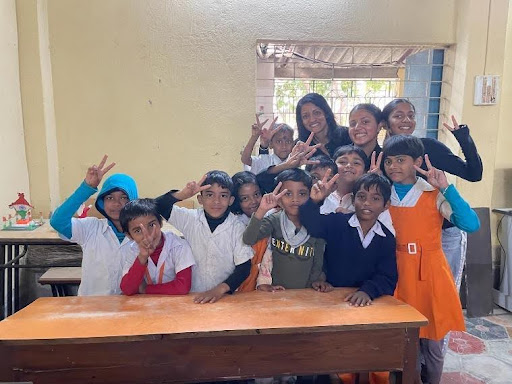
We were also whisked away to the Primary School, which is a short distance away and is a co-educational school. It has a small fee and has students from 3 years old onwards – who were so incredibly sweet and lovely. We got to witness a drama rehearsal for an upcoming Saraswati Puja (major Bengali festival) as well as play with the young kids in their playground. Highlights included needing three kids to sit on one side of the see-saw to balance one of us (!) and a barrage of kids running up to play on the slide as soon as Kiera went up there – to Tiya pushing about 12 kids on a small spinning machine and watching them scream in delight. The primary school is more dated that the high school and could do with some upgrades to the classrooms and playground. It was delightful to see how engaged and happy the children were and the focused, kind and patient energy of the teachers.
Initially the school began with 12 students and whole lot of hope and determination. Now, the primary school has 72 students from pre-kindergarten to grade four, while the high school includes 142 girls from year five to ten. The dormitory houses 60 girls. There are 9 teachers at the primary level and 15 at the secondary, all living in the local region. The school relies solely on donations, with no government or other funding such as grants. They have an onsite kitchen and cook, who provide free nutritious vegetarian meals to all the children (we were able to have lunch there and the food was exceptional!). Stationed overnight is a security guard as well as two staff/dorm managers who stay overnight and look after the girls’ safety and wellbeing. The building is equipped with security cameras throughout. Without a doubt, the girls were extremely well looked after; a happy, enthusiastic and dedicated bunch who alongside their studies knew how to have fun, love singing and dancing and enjoy genuine, close friendships with each other.
We left (reluctantly) feeling an overwhelming sense of pride for knowing people who organise, work with and contribute to such a worthwhile initiative which changes so many girls’ lives – and done so purposely and joyfully. To meet and interact with these incredible, vivacious and smart students was the highlight of our trip. Without a doubt, we will all be back to visit again and now feel a sense of obligation to share this beautiful story with our Melbourne community as a source of hopeful pride, faith in good ideas, good people and just re-iterating in our minds how important girls education and wellbeing is for a brighter future for our world.
Kahini is proud to support this work – reach out if you’d like to learn more about the school or how to get involved. We’d love to work together to support this initiative in more ways together!
Huge thanks go to:
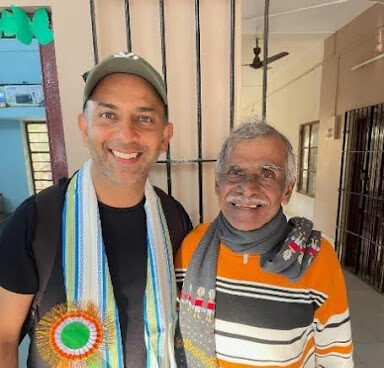
- Niranjan Uncle and Shobhana Aunty for accompanying us to the school and for your care and love.
- Tapashi for joining us in this journey and for your support.
- My dad (Baba) for introducing us to the school and its work.
- Mr. Ratan Mistri, Mr. Sudipta Mistri and all the staff for your hospitality and care for my family and Tapashi when we visited.
- All the students and especially the high school girls for their generosity, love and energy – keep shining!
- Staff at the school include: Pijus Sandan, Abhishek Kaman, Jaydeep Halden, Renuka Bishai, Krishnakanta Moule, Nishikanta Pandit, Biswajit Kaman, Rahul Mistri, Rupa Halden, Bholnath Goush and Biswajit Halden.